J. D. Newman has written four novels for young readers that were published by Zion Book Works, an imprint of Leicester Bay Books. These include three books for tween readers that comprise “The Sandy Hunter Saga:” Sandy and the Weird Sisters, Sandy and the Dance of Faith, and Clara and the Mermaids. It also includes Make Believe Twins, a novel for early readers. These novels can be searched by title and purchased on Amazon.
SANDY AND THE WEIRD SISTERS
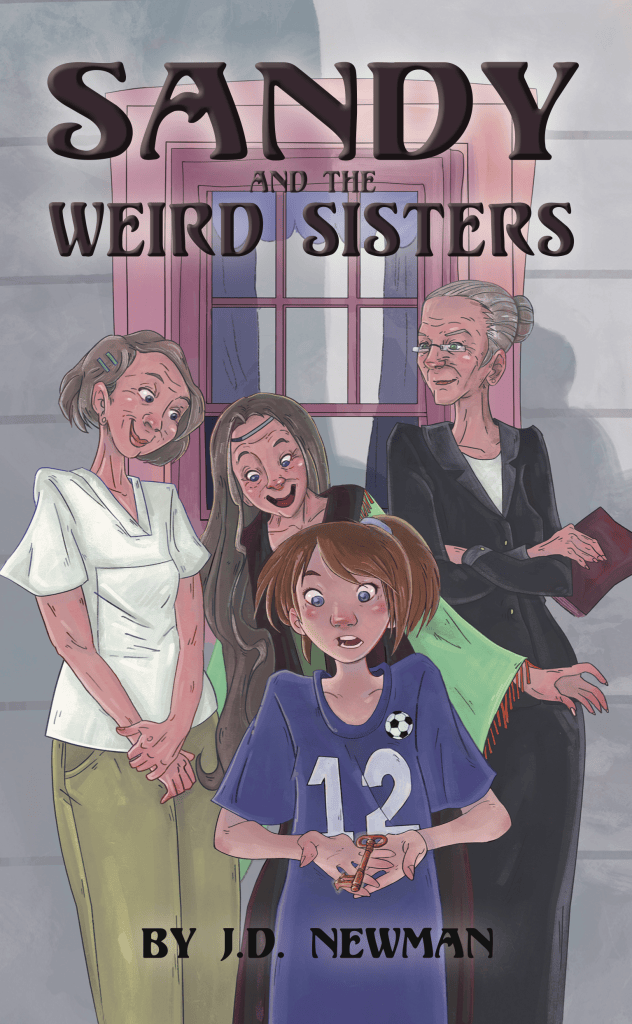
Sandy has grown up under the influence of her widower, rugby-coach father and her athletic older sister Roxie. When her father and sister go to England for a rugby tournament, they leave Sandy in the care of her three great aunts, referred to in family lore as the “weird sisters.” The mysterious Weird Sisters have not been seen in years; or so Dad says. Each of the aunts espouses a different faith — Catholicism, Mormonism, and Unitarianism — and yet they respect and support each others’ practice, while Sandy views them as the outside seeker of truth she truly is. Sandy enrolls in a literature course, dance classes, and winds up in a community musical production, abandoning the girls’ soccer team with which she is supposed to be playing. During her three weeks with her aunts, and never having attended any religious services before, she takes part in services and activities at each of her aunts’ churches, finding things that she admires as well as things that confuse her. Her identity of self is to be forged during these three weeks — striking while the metal is hot, so to speak — an identity that she will take the remainder of her life to fashion and finish.
SANDY AND THE DANCE OF FAITH
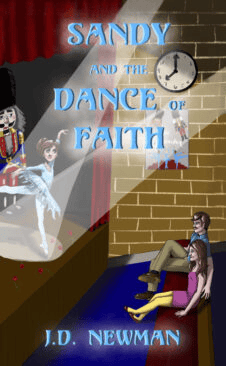
Sandy Hunter’s entrance essay has earned her admission to Memorial Catholic School. However, as she begins her seventh grade year, Sandy feels intimidated by the other students who all believe strongly in something. Sandy struggles to live up to the declaration she made in her entrance essay that she exercises her faith through dance. She continues to explore the Catholic, Mormon, and Unitarian faiths practiced by her great aunts. Sandy strives to connect with her older sister Roxie who has always walked in their father’s footsteps but is beginning to define her own path. As Sandy finds her place in the realm of ballet and the world of faith, she discovers her potential as a dancer and a believer. This second book in the Sandy Hunter Saga follows the spirited twelve-year-old through the autumn after the summer she spent with her three great aunts, who she playfully calls “The Weird Sisters,” in the book “Sandy and the Weird Sisters.”
CLARA AND THE MERMAIDS
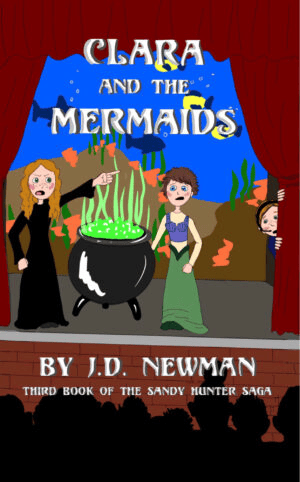
Twelve-year-old Clara doesn’t know what she wants to be, but she knows doesn’t want to be a miniature version of her mother, Sandy Hunter Gentry. Clara imitates those around her, including a shy girl named Paisley, and her pretending leads her into the world of drama and theatre. She adapts and performs her own version of Hans Cristian Andersen’s The Little Mermaid and stage manages her elementary school production of Disney’s musical version. Clara comprehends how the mermaid lost her voice by changing herself for others and how she found peace by being true to herself and her instincts. This third story in the Sandy Hunter Saga, presented through letters, emails, and text messages, takes place 37 years after Sandy and the Weird Sisters and brings the story full circle as Sandy shares her twelve-year-old self with her own twelve-year-old daughter.
MAKE BELIEVE TWINS
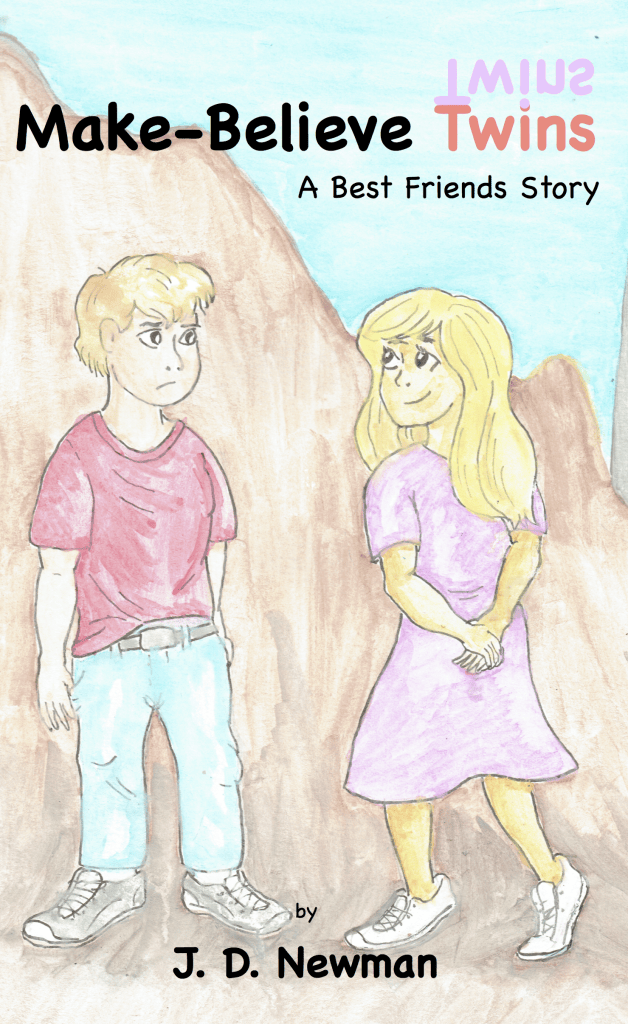
This novella for younger readers features a first grade boy and girl growing up in Utah in 1972 who share a common birthday and a love of puppetry and Mr. Roger’s Neighborhood. Glenn is the fastest runner and the fastest reader in the first grade, until the new girl, Janet, bests him at both. When the only person who could be your twin is the new girl in school, that’s difficult for Glenn — because the guys will never let her play on their team! When Janet’s family survives a house fire, Glenn discovers that, in times of need, a rival can become an ally. Glenn and Janet watch Mr. Rogers, make puppets together, and create their own Neighborhood of Make-Believe. But when they argue about their religions, can these “make-believe twins” remain friends if they each insist they’re right? Set during the Space Race of the early 1970s, Make Believe Twins tells a story of how friendly competitors can sometimes become real friends, growing up through friendship, and finding loyalty. This can be a real message of hope for children in today’s society, as they see little but division from the adults all around them, as they discover, in true child like fashion, that we are much closer together than we are far apart.

